What you Need to Know about Stocks & Bonds

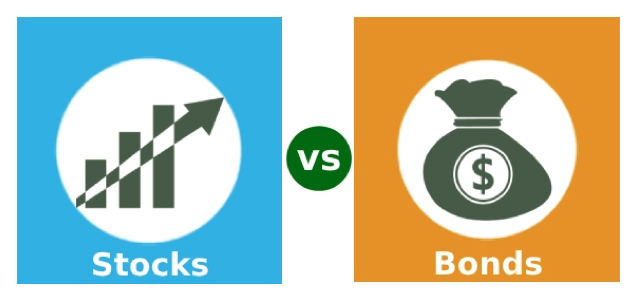
Stocks

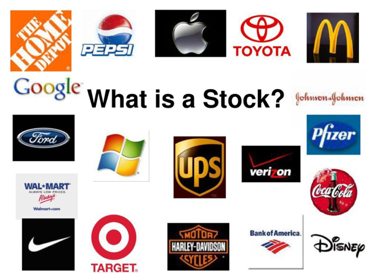
A stock is an investment; when you purchase a company’s stock, you’re purchasing a small piece of that company.  The piece that you purchase is called a share.  When you own stock in a company, you are a shareholder because you share in the company’s profits or losses.  As a shareholder, you technically are part-owner of the company; therefore, you receive certain voting rights within the company.  When shareholders purchase stock, it benefits the company by raising capital.  Companies, such as UPS, Apple, Pepsi, Ford, or any other public company in the world, grow and invest this capital into products for the company’s growth.  As the company grows and prospers, the shareholders participate in the growth of the company either in the form of a higher stock price, or as a quarterly dividend.  For investors, stocks are a way to grow their money over the long-term and provide a hedge against inflation. 

Investors purchase stocks in companies they think will go up in value; if that happens, the company’s stock price per share rises in value as well. The stock can then be sold for a profit.  Purchasing a stock can be riskier than purchasing a bond, mutual fund, or ETF, but the reward can be greater as well.  Stock prices change by the minute during the day.  Typically, stocks are known to be bullish over a longer duration; or in layman’s terms, stocks tend to rise over a longer time period.  When the stock goes up overtime, and the investor sells the stock at a higher price than what he paid for the stock, there is a capital gain.  A rise in the stock price is the most common way to make money in a stock, but you can also make money through dividend income.  Dividends are the cash payments made to the shareholders for sharing in the profits of the company.  A dividend is typically paid quarterly to shareholders.  Mature companies with a long history of paying consistent dividends, like Pepsi, will typically raise their dividend over time.  Pepsi is a value company stock.  Growth stock companies do not usually pay a dividend; although, growth companies typically have higher gains, or rising prices.  Growth companies focus on ploughing all its cash back into the company, to grow the company (hence the word growth stock).  A good investment should earn an average of approximately 7%-10% per year.

Bonds

Think of a bond as a loan. When you buy a bond, you’re purchasing a loan to a company or government that pays back a fixed rate of return. It is a safer investment than stocks, but still has risk.  Bonds generally require minimum investments, typically bought in $1,000 increments. The investor or lender receives semi-annual income, or a coupon, in return for buying the bond.  Unlike a stock that typically pays quarterly dividends, bond funds usually pay interest income to you on a monthly basis.  Bonds are inversely correlated to interest rates; when interest rates go up, bond prices go down.  A good bond investment should earn an average of approximately 2%-5% per year. 

There are many different types of bonds which you can buy; the safest bond would be a US Treasury bond, because it is backed by the guarantee of the U.S. Federal government.  Frequently, the Treasury Bond is pegged to a 30-year loan payback.  Other types of bonds investors buy are mortgage backed bonds, corporate bonds, or bonds issued by companies such as municipal bonds, or global bonds issued by other governments.  All governments and corporations need bonds in order to borrow money.  It’s commonly used for governments to fund roads, schools, bridges, dams, buildings, or other infrastructure.  Here is an example to help grasp the concept of a bond: If the investor purchases a bond for $1,000; at the end of the one-year term the investor receives the $1,000 back, but also receives the interest along with it.

While it’s possible to buy individual bonds, many people choose to purchase them through bond mutual funds, which offer lower-cost access to a diversified group of bonds.  The quality and safety of bonds help balance the risk associated with stock-based investments.

Written By: Derek W Green
Schenley Capital, Inc. Associate

Click the link below to view What you need to know about Mutual Funds & ETF’s!

Keep Calm (COVID-19) –

Coaching Our Clients Through a Crisis

On behalf of Schenley Capital we wanted to reach out to make sure you and your family are safe and productive as we search for answers in uncertain times as these.

We want to ensure you all that we are carefully reviewing all client portfolios and keepin a close eye on all accounts.

Today was an “up” day – the market was up +1,841 or 11%, the largest one day gain since 2008!! Congress is on the brink of passing a Corona Virus $500 B Stimilous package to assist distressed businesses – the “bailout with No strings attached”. This package is to help businesses from the economic damage of the work stoppage because of the Corona Virus. We are still using the disorderly market to make timely purchases of quality investments at low prices!

Schenley appreciates the support of all of our clients. Thank you for sticking by us during this unusual time.

Please contact us if you have questions or concerns!

(412)-749-9256
Written on March 24, 2020

A week’s worth of Volatility: Coronavirus

     The updated reports of the coronavirus have monopolized headlines and greatly impacted the public markets this week.

The disease’s bearing on the global economy is very difficult to quantify, we have already seen the negative ramifications for the global communities and slowing markets for goods and services.  We believe that the influence on economies is likely to be more protracted than expected.  The foreign health agencies have warned of the continued spread of the disease, they are working hard on the containment of the virus. 

     From a financial market perspective, the recent week’s downturn has erased the gains in the stock market over the past 12 months.  Some return of gains was inevitable, in our view, as the market had reached historic high valuations.  Notably, the losses demonstrated in the past week pales in comparison to the market gains in the past 10 years.  Since early 2009 to late 2019 the S & P has expanded approximately 340%.  We believe this broad perspective may help to suppress any impulsive knee-jerk reaction to sell or make a poor short-term decision.  The swift losses in the market are never ideal, we are not sellers in this market.  The rapid shift of market sentiment lead to a surprise 50 BP (1/2) point cut by the Fed to boost confidence on March 3rd.

We were putting cash to work this week, buying at lower prices.

    The market has traded with great speed and volume in addition to the precipitous drop this week.  It is important to know that we have positioned our client portfolios with care, and we have created diverse portfolios purposefully.  This tactful approach to financial market exposure helps us prepare for such market volatility.  Our goal is to invest in the market by selecting investments that have price upside and protect holdings on the downside.  We are not momentum based traders, although we are engaged in the markets on a daily basis.

Recent market moves are creating buying opportunities, as the market is moving to an oversold position.

Beth Genter
President
ehgenter@www.schenleycapital.com

1000 Point Drop – Feb. 2020 Market

By: Elizabeth Genter

Markets are Volatile – Prepare don’t predict 

The market dropped yesterday -1,032 all headlines are about the Coronavirus. The previously steady market took a dramatic decline due to the ongoing news about the spread of the virus.  This subtle shift implies the market concern about supply chains and how businesses will continue to function as the virus spreads. The news of the Coronavirus cases spread outside of China particularly to Japan, South Korea, and Northern Italy.  The borders of Japan and South Korea were shut down, creating additional fear.  All countries are calling for heightened protection and plans, such as the strategic plan being created in the US.

The economy has been priced to perfection, as we have experienced a steep run-up in the market. The values of many companies have been stretched and the prices have climbed to a lofty level.  In late 2019 we witnessed the absurd valuations and high prices for Beyond Meat and the blow-up of the WeWork IPO, which never came to market as an initial stock offering. The valuations for the few market leaders:  Google, Amazon, Apple, Microsoft, and Facebook have been leading the market and have had a meteoric runup in the past six months. For example, Apple has gained $110 points in the last six months.

 This has created a very narrow market consisting of a few stocks leading the entire market. 

 We have been waiting for some sort of sell-off, in our view, this is an opportunity to purchase equities at a lower price point. 

Over the past few weeks, we have seen signs of the market’s crazy trading to historic highs, the market seemed to go up despite negative news.  There are two short-term certainties, one, the virus is having a global impact, secondly, the virus will eventually go away.  

Volatility is the friend of the buyer, using the volatility to purchase desired stocks on down days.  It is the same experience or euphoria of buying an item on “SALE”!    

 
This is not the time to sell– it is a time for patience.  

An equity investor or saver is a long-term thinker with a longer time horizon.  The Coronavirus is a short-term event with short term consequences.  When we think of a company’s earning power, we think in terms of four to five years, not just the current quarter.  Consumer stocks in the short-term pull-back or drop in price with a pullback or market event, creating an opportunity for you own or buy at a lower price.

This greed & fear cycle leads an investor to buy high and sell low or the thought of reaching for more risk to receive little reward.   

If an investor has a longer time horizon this leads to a smoother ride and better long-term results.   

Our thoughts would be to not sell in times of volatility, although in a slow shift to higher-quality stocks with dividends versus the high-flying growth stocks.  These are not necessarily energy stocks, although stocks with steady growth and a dividend.  Our client portfolios are protected, as they are diversified into many different asset classes and across global economies. It is wise to have a percentage in bonds which creates stability in a portfolio and income.  The music doesn’t play forever…. 

August 2019 Volatility

What happened in August? 

August was a rough month, as the volatility continues.

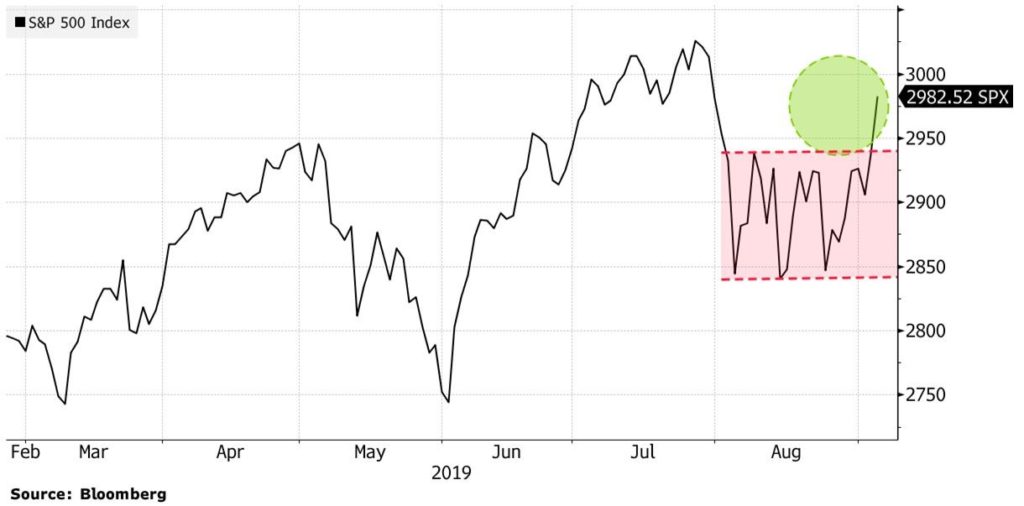
     August was head spinning, marked by many measures to be the most volatile month in 2019.  Even with a strong finish in the last week of the month, the market finished down 2%.

     The top performing sectors in the S&P were technology +29%, Real Estate +28%, and consumer discretionary +21%.  (Non-essential goods) The bottom sectors were energy, health care and materials.  The S&P year to date is +18.3% amidst the August volatility.

     Although the sparing between Washington and Beijing continues to dominate the headlines and influence short-term moves in the market.  Investors grappled with as lack of clarity on the trade issues, global growth and a Brexit showdown.  The fears about escalating U.S. and China Trade tensions sent the stock market index tumbling down 2.3% three occasions in August. 

     September is proving to be a different month!  Today stocks surged and Treasuries are tumbling after news of the trade tensions have eased.   We have experienced an up-market gain in five of the last six market sessions.  We are very cautious about the prospects of a trade deal coming to fruition, although some trade concessions would be very positive for the economy and the market.  This President likes to “win”, even though he does not have international support all countries will benefit from the U.S. leading these negotiations with China.

     Even though corporate earnings growth has slowed down, the economy remains strong and unemployment is at an historic low.   We realize that it is very tempting for people to want to adjust their portfolios to match the daily headlines, we find this activity to be very counterproductive to portfolios.  Schenley has been advising clients to stick to their long-term asset allocations.

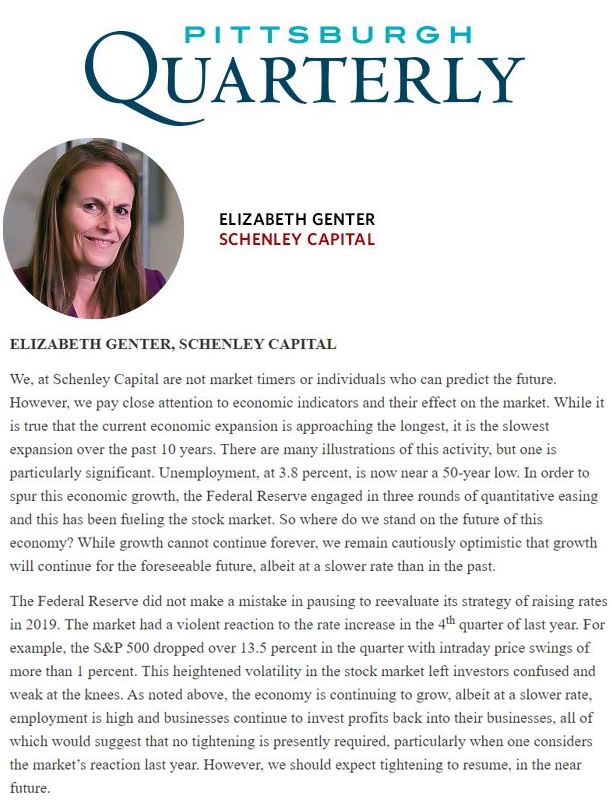
Recession and The FED

“We’ve asked the regions top wealth managers to respond to two questions.”

1. “If the current economic expansion lasts past July, it will be the longest in U.S. history. When do you expect the U.S. economy to enter into a recession?”

2. “After raising interest rates steadily for more than a year, the Federal Reserve suddenly made a dramatic U-turn, and equity markets responded favorably. Is the Fed making a mistake by pausing in its tightening efforts?”

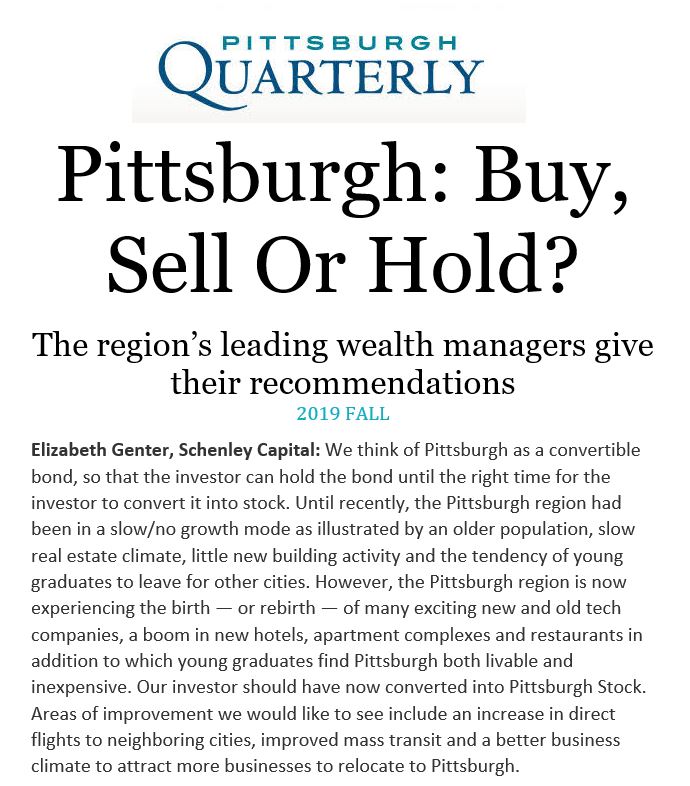
Pittsburgh Quarterly Featuring Schenley Capital, Inc.

“If Pittsburgh were an investable security, would you advise your clients to invest?”

For questions and concerns regarding any investments, please contact us at Schenley Capital, Inc.

(412)-749-9256
417 Walnut Street Suite 200
Sewickley, PA 15143

Credit Cards: What You Need to Know

Looking to help your child start earning credit before going back to school? Looking for some new ideas on ways to earn points and rewards with credit cards? Read on for helpful information and ideas.

 What is a Credit Card?

Credit cards are similar to debit cards in transaction; instead of having the funds removed directly from your checking account when you make a purchase on your debit card, you are basically taking on a short-term loan with a credit card. Initially, this loan does not accrue interest- unless you miss your monthly payments beyond the stated grace period.

You start to accrue interest on the balance that you do not pay off from your billing statement. This is the piece where many people get into trouble: Paying off your credit card balance before it is due is the best way to build your credit history while avoiding high rates of interest and late fees.

APR is the Annual Percentage Rate- this is the measure of the full cost a lender charges for borrowed funds which are not paid off each month. The average APR for credit cards is 16.71% (based on a rate report for 2018). Compared to the average 30-year fixed mortgage rate at 4.74%, average auto loan at 4.21% for 60 months, and average federal student loans at 4.81%, you can see just how lofty credit card debt can be and how quickly it will accrue.

So why own a credit card? Three reasons for owning a credit card:  1) create credit history, 2) convenience, 3) benefits and rewards. The high interest rate is only charged if you do not pay off your balance each month! There are several benefits to using a credit card. 

Why is a good credit history so important?

Good credit history is like a good reputation.  When you have good credit, it illustrates that you are responsible and that you will pay your bills on time.  The bank or lender will in turn trust you to pay back a loan when you apply for a car or condo loan in the future.  Your track record of paying back your credit card on time creates a credit score. Lenders review your credit score each time you wish to borrow for a larger purchase; lenders can look at all your credit cards and see if you have a history of paying bills on time!

What are the benefits?

There are so many different credit cards out there and it pays to do your research. Here are a few different types:

  1. 1. Cash Rewards credit cards- many earn 1% back on all purchases made, with 2%-5% back on other qualifying purchases such as grocery stores, restaurants, gas and fuel etc. (often rotating higher cash back categories each month). There are many cash reward cards that have no annual fee, which is another important factor to keep in mind when selecting a credit card. Options for cash rewards cards include PNC, Capital One Quicksilver or Capital One Savor, Bank of America, Chase Freedom Unlimited, and Discover it to name a few.

  • 2. Airline credit cards– most major airlines have a credit card in which you earn points or “flyer miles” to use toward flights, rental cars, and hotels. Some airline credit cards are with Southwest, American Airlines, and United. A travel card option for those not wishing to be loyal to just one airline is Chase Sapphire Preferred.

  • 3. Hotel or travel points credit cards- these range from specific hotel cards which work within a chain or branch of hotels, to broader travel cards which can redeem points at various hotels, travel, or theme park admissions. These cards are desirable for their many perks and features including access to airport lounges, concierge services, and priority passes. Platinum or Gold cards are desired by those who like to travel, and some select these cards for the prestige. American Express, Chase, and Capital One have travel cards with multi-level benefits.

  • 4. Student credit cards– these are a good choice for responsible college students with little to no credit history. These can help build accountability as well as credit. These cards tend to have little to no annual fee and a low borrowing limit at which their card maxes out, usually somewhere between $500 -$1,000. Discover is a popular card for students.

Some other benefits of using a credit card include:

  • Building your credit score- The more often you can prove to creditors that you are timely and spend below your credit limit, the more opportunity there is to improve your credit score and create good credit history.  A good credit score will allow you to receive better rates when you apply for a car or mortgage in the future.

Sign up bonuses may include large amounts of bonus points toward cash back or rewards, complimentary flights, no fees for the first year, and other promotional perks.

  • Fraud protection sorts out suspicious purchases or identity theft attempts

  • Complimentary travel insurance, which may act as a warranty, rental car insurance, or purchase protection insurance all aid in peace of mind.

  • Convenient and safe online shopping- as most have several layers of security protection.

  • Works in any currency, so you can take your card oversees with a minor currency conversion fee.

You will receive the greatest advantage if you pay back the credit card’s short-term debt in a timely manner. These benefits are enticing, so it is important to understand the fees, timing of payment, credit limit, and your ability to adhere to these rules before signing up. Overall, using a credit card responsibly is a great way to earn credit with many added advantages along the way. 

Please contact Schenley Capital, Inc.  We are happy to answer any questions.

Written by: Lauren Porter
Associate at Schenley Capital, Inc.
  • 417 Walnut St.
  • Suite 200
  • Sewickley, PA 15143

Phone: (412)-749-9256

8 Ideas for First-Time Home Buyers

8 ideas for First-Time Home Buyers

A Three-Part Series

Buying a home is very exciting, although it can be overwhelming. Especially, when houses are selling quickly, and over the asking price. In a HOT market, such as 2019, you may be tempted to make an impulsive purchase, which may crush your financial budget.  You want to be very careful to buy the home that you love in a way which does not hurt your future financial and personal goals.

Here are some great ideas for buyers at any age!

1.      Pay off all debt and build an emergency fund –

Owning a home is more expensive than renting. You are responsible for the maintenance; therefore, make sure you are debt free and have saved 3-6 months of expenses. Unexpected expenses pop up such as: a new washer, a new furnace, or replacing the roof. Tackle one room at a time. 

2.      Determine how much you can afford –

Make sure you can afford your monthly housing expenses plus fees, taxes and insurance. The total cost of the home per month should be less than 25% of your monthly take-home pay. Include your 20% down payment and allow for a cushion. Add in costs for snow, garbage removal and internet charges.

3.      Save for a Down Payment –

We can help you with short-term income investment options as you save for your down payment. The 20% down payment will reduce your monthly mortgage payments and eliminate private mortgage insurance (PMI) expense. A 15-year fixed, or variable mortgage is an effective low-cost option. A 30-year conventional fixed mortgage is a longer-term option.

You can use a piece of your ROTH IRA as part of your down payment; however, we don’t recommend this strategy. This is for first time home buyers, such as yourself, your child or grandchild.

4.      Saving for Closing Costs –

Closing costs can add up; on average the costs could be 3-4% of the purchase price. These fees include: the appraisal, home inspection, credit report, and a title search.

5.      Get Pre-Approved for a loan –

Take the extra time to get a pre-approval letter from a lender or mortgage broker. This will show that you are a serious buyer and that you have a leg up on the competition. You will have to verify all your financial information, such as proof of income, taxes paid, a credit check and submit your loan information for preliminary underwriting.

6.      Find a home for sale in your price range –

Look for homes on-line, take a virtual tour, and hire a real estate agent for access to homes on the Multi list. Research neighborhoods, high quality school districts and length of your commute.

7.      Make a Competitive Offer (within your budget!)

You are pre-approved therefore you are ready to submit an offer. It may be tricky to know how much you should offer. Get advice from your real estate agent to ensure your offer will be competitive. 

8.      Get Ready for Closing –

On average it takes 41 days to close on a house. Read all documents carefully and ask questions if things are not clear; you are signing the documents.

Buying a home is a large and important purchase; therefore, you do not want to risk making costly mistakes. Your home is one piece of the puzzle, how it is financed and how you invest the rest of your finances is our business. We are here to help!

417 Walnut Street
Suite 200
Sewickley, PA 15143

Written by:
Beth Genter

Downsizing Your Home

Newfound Money for Retirement

After decades of focusing on building your assets, retirement is the time you are finally able to sit back and enjoy your nest egg.  Perhaps you would like to be in a smaller house close to town, a contemporary town house, or a house on one floor with an open floor plan.  If you dream of traveling more, playing an instrument, hiking, and playing more golf or tennis during retirement, then you may consider downsizing to a smaller home to increase your savings.  Your retirement could potentially be 30 years without working income.  Nevertheless, moving to a smaller space at any point can often seem overwhelming and daunting.

The Upside of downsizing:  significant savings; more time to do the things you enjoy; declutter your life.  Maybe your children have left for college, maybe you really don’t need the extra bedrooms, or what if your house is just too large to maintain?  If eliminating a mortgage payment completely and putting a large chunk of money towards your retirement sounds like a dream come true, then downsizing during retirement could be the right choice.

Think of the financial benefits long term….

Reducing Debt… What if you could reduce or eliminate all debt that you are currently carrying by selling your larger home, paying off the old mortgage and purchasing a smaller home?  Paying off debt is always a wise decision, whether in a lump sum or short-term payment.  Consider if you reduced your mortgage an additional $500 a month and put the cash to work.  Example: You owe $18,000 on a loan with 6% rate, and a $200 monthly minimum payment.  It would take 10 years to pay off that loan; however, if you put an additional $500 toward that same loan each month, you would pay off the loan in less than 2.5 years!

Super charge your retirement fund… Once you are debt free, you can really build wealth for the future by putting large chunks of money to work.  Example:  Suppose you sold your house and you have $250,000 net proceeds; if you invest the funds over 20 years at a 6% rate of return, you would receive $827,550, through the power of compounding.  You can create an even larger nest egg by consistently adding to your retirement accounts in earlier years on a monthly basis!  Remember, the money in your company retirement accounts and individual retirement accounts (IRA’s) grows tax deferred; you would not pay tax on the income or the capital gains.   Imagine how much faster your funds would grow when placing larger sums to work in the market.

Benefits of owning a smaller house…Less time spent maintaining your rightsized house.  You could reduce debt by paying off your mortgage and investing your funds directly, to jump start your retirement fund.  It is important to choose an experienced real estate agent to price your current home correctly. 

Ready to downsize? we can help you properly invest the proceeds from the sale of your larger home, let’s get started!

Schenley Capital Inc.

417 Walnut Street suite 200 Sewickley, PA 15143

Written by: Beth Genter Derek Green and Lauren Porter